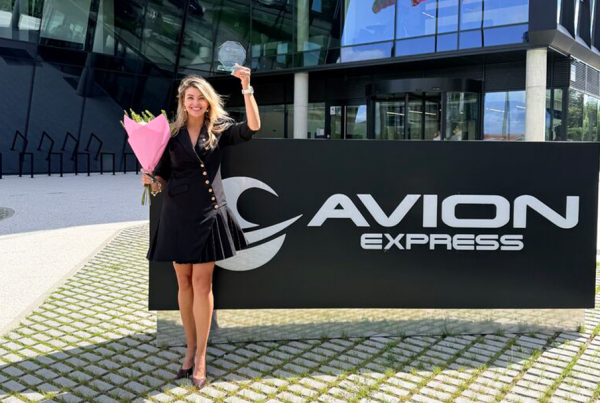
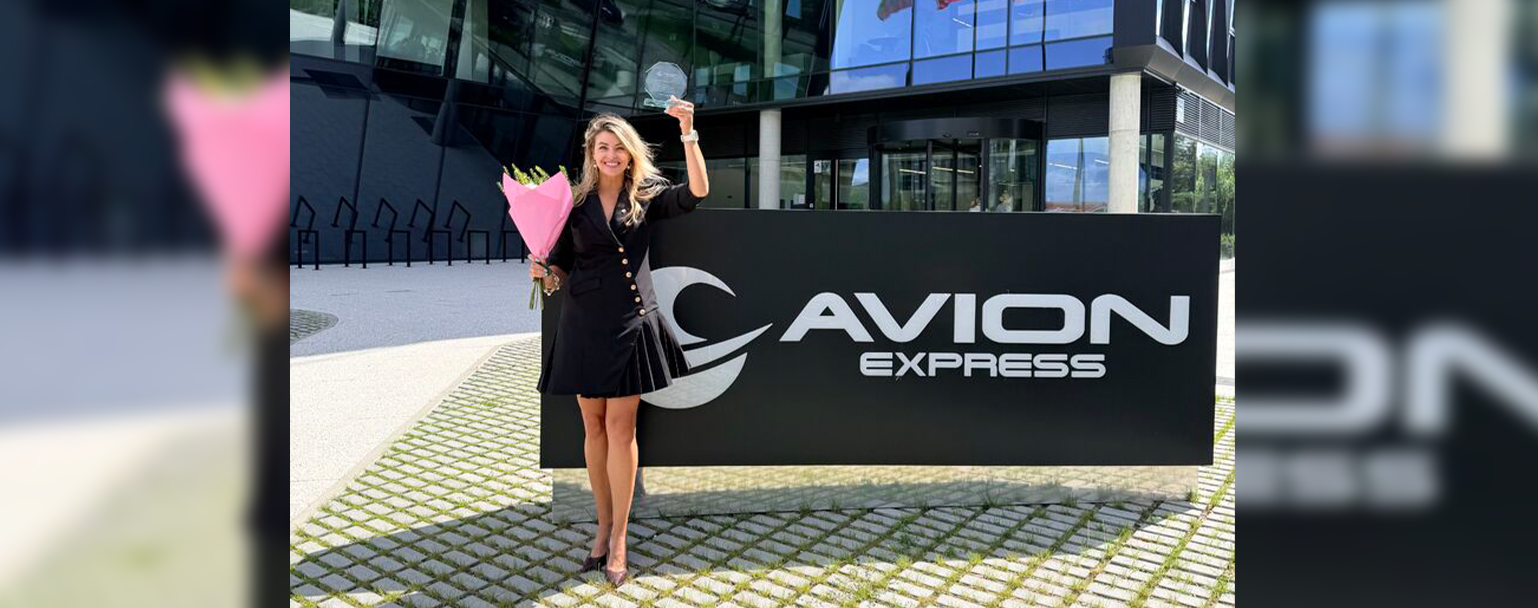
Fifteen years in the ACMI industry means experiencing it all – rapid growth, new markets, changing priorities, uncertainty, and transformation. Reflecting on those years, Laura doesn’t speak about titles, achievements, or measurable results. She speaks about mindset, people, and perspective. Looking back, she says some things at Avion Express have never changed: our people-first mindset, our ambition, and our passion for aviation. At the same time, we’ve become more mature, more structured, and more sustainable, without losing the drive that got us here. And perhaps that’s what 15 years really teaches you: organizations grow, industries evolve, but the right mindset helps you grow with them.
Laura, 15 years in the company – is that a long time for you?
Yes, definitely. But Avion Express has never been the same, it’s a constantly evolving and changing organization.
Speaking of change, we’ve experienced a lot of it over this year. How have you personally experienced change, and what advice would you give to others?
One of the biggest lessons I’ve learned over the past 15 years is that every phase eventually passes.
I’ve always enjoyed change because that’s simply part of who I am. Routine makes me feel stuck, while change gives me energy. One of the reasons I’ve stayed with Avion Express for 15 years is that it has never been the same for very long: there are always new clients, new countries, new projects, and new challenges.
I’ve experienced both periods of rapid growth and periods of opposite. Growth is exciting, but it’s also incredibly demanding because you’re building something that has never existed before.
Over time, I’ve learned that organizations go through cycles. Just like people can’t sprint forever, companies can’t constantly grow or constantly struggle. Experience gives you confidence because you know that every stage eventually passes.
What personal qualities have helped you the most?
The first thing that helps me is perspective, as I mentioned before.
The second is emotional awareness. During periods of change, it’s important to recognize your own emotions instead of letting them control your decisions. Simply understanding what you’re feeling helps you respond more thoughtfully.
The third is understanding other people’s emotions. Change affects everyone differently. Some people get excited, while others become anxious or frustrated. I’ve learned not to take those reactions personally. Often, people’s responses are driven by uncertainty rather than by you.
Looking back over the past 15 years, what has changed in the organization, and what has remained the same?
Some of the most important things haven’t changed at all. We’ve always had a people-first mindset. Our ambition hasn’t changed either. We’ve always been willing to challenge ourselves, enter new markets, and take on opportunities that others might avoid. Another thing that has remained the same is our passion for aviation and ACMI. We genuinely enjoy this industry.
What has changed is our maturity. As the company has grown, we’ve become much more structured and sustainable. In the early years, there was a real “rock and roll” spirit to how we worked. Some people might miss a bit of that early “rock and roll” energy, but I see this as a sign of growth. Mature organizations don’t lose their ambition, they learn how to channel it in a more sustainable way.
As VP People & Culture, you’ve seen many team members grow within the organization. What qualities help people succeed here?
People who succeed here usually love aviation and genuinely enjoy what they do. They are willing to say, “Let’s do it,” rather than, “It can’t be done.” They are flexible, open to change, and don’t get discouraged when priorities shift.
What do employees most often misunderstand about HR?
The biggest misconception is that HR exists to comfort people or make everyone happy. I don’t see it that way at all. HR’s responsibility is to balance the needs of the business with the needs of employees. Our role is to help both sides understand each other and create an environment where people can succeed while the business achieves its goals.
I see HR as a mediator between people and the business.
What does it mean to be not only a good professional but also a great colleague?
To me, a great colleague is someone who works toward a shared goal rather than competing with other people or departments. Sometimes that means putting your own team’s priorities aside because the organization’s success is more important than protecting your own territory.
When people become too attached to “my department,” “my responsibilities,” or “my goals,” collaboration becomes much harder. Great colleagues don’t constantly think, “This isn’t my job.” They think, “How do we solve this together?”
I remember when the company was much smaller. We had only around twenty aircraft, and in many departments, there was just one person. Everyone simply did whatever needed to be done.
I’ve assembled cabin crew certificates, transported furniture across Vilnius for an office opening, and searched for materials to build tables for company events. None of those tasks were part of my official job description, but nobody questioned whether something belonged to HR or another department. We simply stepped in and helped because the company needed it.
I still believe that mindset is one of the strongest indicators of a great colleague.
Another quality that’s equally important is the ability to admit mistakes. Too many teams waste valuable time trying to identify who’s responsible instead of solving the actual problem. Imagine how much faster we could move if people simply said, “This part was my responsibility, and I missed it.” Admitting mistakes also creates psychological safety.
When someone openly acknowledges that they aren’t perfect, it gives everyone else permission to be honest as well. People stop pretending to be flawless, stop protecting their image, and start learning from each other.
If there’s one idea people should take away from this interview, what would you want it to be?
If there’s one thing I’d like people to remember, it’s that everything passes. When you understand that, it’s easier to stay calm during difficult times and remain humble during successful ones. Every phase brings something to learn, and every phase eventually comes to an end.
So, trust the process, keep moving forward, and remember that whatever you’re going through today won’t last forever. That’s probably the most valuable lesson these 15 years have taught me.
Congratulations, Laura, on this remarkable milestone, and thank you for helping shape the culture of Avion Express over the past 15 years.